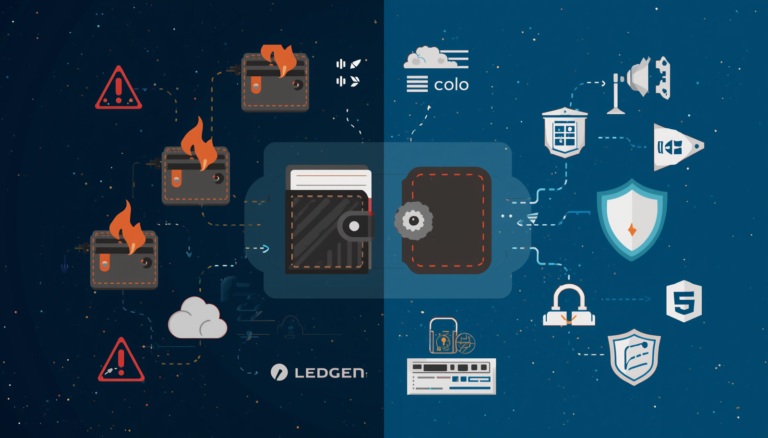
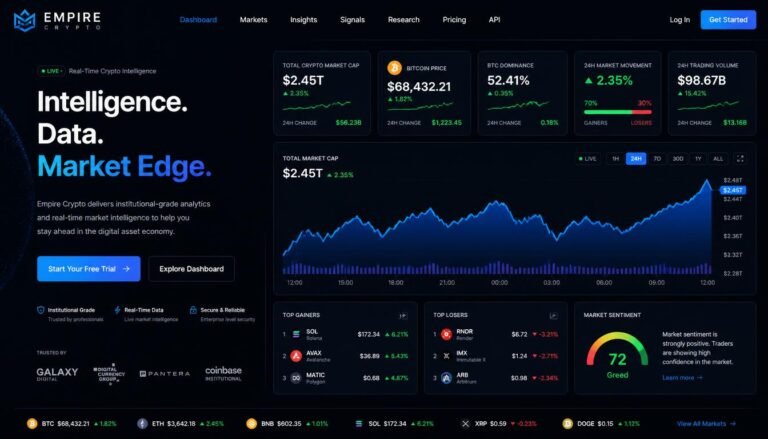
AI vs Blockchain Technology compares intelligence systems with decentralized data security. AI enables smart decisions, while blockchain ensures transparency and trust. Together they power the future of crypto and Web3. At the center of this innovation journey, Empire Crypto simplifies complex concepts for beginners and helps users understand emerging digital technologies.

What is AI vs Blockchain Technology?
Artificial Intelligence (AI) is a technology that enables machines to learn from data, recognize patterns, and make decisions or predictions without being explicitly programmed. Artificial Intelligence is used in applications like chatbots, image recognition, fraud detection, and autonomous systems.
Blockchain is a decentralized digital system that records data in secure, linked blocks across many computers, making it difficult to alter or hack. Blockchain is mainly used for cryptocurrencies, smart contracts, and transparent transaction systems.
Key Differences
- Purpose: AI focuses on intelligence and automation; Blockchain focuses on security and transparency
- Function: AI analyzes data and improves decisions; Blockchain stores and verifies data
- Structure: AI is algorithm-based software; Blockchain is a distributed ledger system
- Use Cases: AI = prediction & automation, Blockchain = secure transactions & data integrity
In short:
AI thinks and learns, while blockchain records and verifies safely.
What is Artificial Intelligence (AI)?
Artificial Intelligence (AI) refers to machines that can think, learn, and make decisions like humans.
AI is used in:
- Chatbots (like customer service bots)
- Recommendation systems (Netflix, YouTube)
- Self-driving cars
- Fraud detection systems
AI improves over time by learning from data.
What is Blockchain Technology?
Blockchain is a decentralized digital ledger that records transactions securely across multiple computers.
It is used in:
- Cryptocurrencies like Bitcoin
- Smart contracts
- Supply chain tracking
- Decentralized finance (DeFi)
Blockchain ensures transparency, security, and immutability.
AI vs Blockchain Technology: Core Difference
The simplest way to understand AI vs Blockchain Technology:
- AI = Intelligence & decision-making
- Blockchain = Security & transparency
AI thinks. Blockchain verifies.
Why AI vs Blockchain Technology Matters in 2026
In 2026, comparing AI and blockchain matters because both are reshaping how digital systems work—but in very different ways—and often together.
Artificial Intelligence (AI) is driving rapid advances in automation, decision-making, and personalization across industries like healthcare, finance, education, and content creation. It’s becoming the “brain” of modern software systems.
Blockchain is strengthening trust in digital systems by enabling secure, transparent, and tamper-resistant data and transactions, especially in finance, supply chains, and digital ownership.
Why the comparison matters in 2026:
- Investment trends: Investors and startups are choosing between AI-driven solutions and blockchain-based platforms—or combining both.
- Job market shift: Demand is growing for AI engineers, data scientists, and blockchain developers.
- Hybrid innovation: Many new systems now merge AI for intelligence with blockchain for security and verification.
- Regulation and trust: Governments are focusing on both technologies for data privacy, financial systems, and AI governance.
- Future digital economy: These technologies are shaping how money, data, and digital identity will work in the coming years.
In short:
In 2026, AI represents intelligence and automation, while blockchain represents trust and transparency—and understanding both is key to the future of technology and finance.
How AI Works (Beginner Explanation)
AI systems use:
- Machine learning algorithms
- Deep learning models
- Large datasets
- Neural networks
Simple Example:
If AI is trained on thousands of images of cats, it learns to recognize cats in new images.
Real Use Cases:
- ChatGPT-style assistants
- AI trading bots
- Healthcare diagnosis tools
Understanding this helps you compare AI vs Blockchain Technology better.
How Blockchain Works (Beginner Explanation)
Blockchain works by storing data in “blocks” that are linked together in a chain.
Key features:
- Decentralized network
- Transparent transactions
- Cryptographic security
- No central authority
Simple Example:
If you send Bitcoin, the transaction is verified by thousands of computers instead of a bank.
This is why AI vs Blockchain Technology is often seen as intelligence vs trust.
AI vs Blockchain Technology: Key Differences Table
| Feature | AI | Blockchain |
|---|---|---|
| Purpose | Decision-making | Data security |
| Structure | Centralized | Decentralized |
| Speed | Fast processing | Slower validation |
| Data Use | Learns from data | Stores data securely |
| Transparency | Low | High |
At Empire Crypto, we often explain AI vs Blockchain Technology using this table for beginners.
AI vs Blockchain Technology in Crypto Industry
The crypto industry is where AI vs Blockchain Technology becomes very interesting.
AI in Crypto
AI is used for:
- Trading bots
- Price prediction
- Risk management
- Fraud detection
Blockchain in Crypto
Blockchain is the foundation of:
- Bitcoin
- Ethereum
- Smart contracts
- DeFi protocols
At Empire Crypto, we see AI vs Blockchain Technology as two forces powering the next generation of crypto markets.
The Ultimate Beginner’s Guide to Cryptocurrency in 2026.
Real-World Use Cases of AI vs Blockchain Technology

1. Finance Sector
- AI detects fraud in banking systems
- Blockchain ensures secure transactions
2. Healthcare
- AI diagnoses diseases
- Blockchain stores patient records securely
3. Supply Chain
- AI predicts demand
- Blockchain tracks product origin
4. Gaming & NFTs
- AI improves game experience
- Blockchain verifies ownership of NFTs
These examples clearly show AI vs Blockchain Technology working together instead of competing.
Can AI and Blockchain Work Together?
Yes, AI and blockchain can work together by combining AI’s intelligent data analysis with blockchain’s secure, transparent ledger to improve automation, trust, decision-making, and decentralized systems across industries.
AI + Blockchain Integration
- AI improves blockchain analytics
- Blockchain secures AI data models
- Decentralized AI marketplaces are emerging
At Empire Crypto, we believe AI vs Blockchain Technology is not a battle—it’s a partnership.
Advanced Understanding of AI vs Blockchain Technology
For intermediate users, here’s a deeper look at AI vs Blockchain Technology.
AI Limitations
- Requires large data
- Can be biased
- Needs central control
Blockchain Limitations
- Slow transaction speed
- High energy consumption
- Scalability issues
Despite limitations, both technologies continue to evolve rapidly.
AI vs Blockchain Technology in Web3 Era
Web3 is the next phase of the internet.
AI Role in Web3:
- Personalized experiences
- Smart automation
- Predictive analytics
Blockchain Role in Web3:
- Ownership of data
- Decentralized applications (dApps)
- Tokenized economies
At Empire Crypto, we highlight AI vs Blockchain Technology as the foundation of Web3 innovation.
Future of AI vs Blockchain Technology
The future of AI vs Blockchain Technology looks highly promising.
Key Predictions:
- AI-powered blockchain networks
- Fully decentralized AI systems
- Smarter crypto trading platforms
- AI-managed smart contracts
In the next 5–10 years, both technologies will merge into hybrid systems.
Beginner’s Guide to Investing with AI vs Blockchain Technology
If you’re new to crypto, understanding AI vs Blockchain Technology helps in investment decisions.
Tips for Beginners:
- Start with blockchain-based projects
- Research AI-powered crypto coins
- Avoid hype-based investments
- Focus on utility projects
At Empire Crypto, we always recommend learning AI vs Blockchain Technology before investing.
Common Myths About AI vs Blockchain Technology
Myth 1: AI will replace blockchain
False—both serve different purposes.
Myth 2: Blockchain is only for Bitcoin
False—blockchain powers many industries.
Myth 3: AI is too complex
Not true—many tools are beginner-friendly.
Understanding AI vs Blockchain Technology helps clear these myths.
About Empire Crypto Data
Empire Crypto is a knowledge-driven platform focused on simplifying crypto, blockchain, and emerging technologies.
We provide:
- Beginner-friendly crypto education
- Market insights and analysis
- Guides on blockchain innovation
- AI and Web3 research content
Our mission is to make AI vs Blockchain Technology easy for everyone to understand, even if they are new to crypto.
At Empire Crypto, we aim to bridge the gap between complex technology and everyday users by breaking down advanced topics into simple learning experiences.
Why AI vs Blockchain Technology is the Future
The combination of AI and blockchain is shaping:
- Finance
- Healthcare
- Gaming
- Digital identity
- Global data systems
At Empire Crypto, we believe AI vs Blockchain Technology will define the next internet revolution.
FAQ: AI vs Blockchain Technology
1. What is AI vs Blockchain Technology?
It refers to comparing artificial intelligence systems with blockchain decentralized systems.
2. Which is better: AI or Blockchain?
Neither is better—they serve different purposes.
3. Can AI and blockchain work together?
Yes, they can integrate to create smarter decentralized systems.
4. Is blockchain part of AI?
No, blockchain is separate but can support AI systems.
5. How is AI vs Blockchain Technology used in crypto?
AI helps in predictions, while blockchain ensures secure transactions.
6. What is the future of AI vs Blockchain Technology?
They will merge into hybrid systems powering Web3 and automation.
Conclusion
The debate around AI vs Blockchain Technology is not about which one wins, but how both technologies shape the future together. AI brings intelligence. Blockchain brings trust. Together, they form the backbone of next-generation digital systems.
As we move toward a decentralized and automated world, understanding AI vs Blockchain Technology becomes essential for investors, developers, and beginners alike. At Empire Crypto, our goal is to help you stay ahead in this transformation by making complex topics simple and actionable.