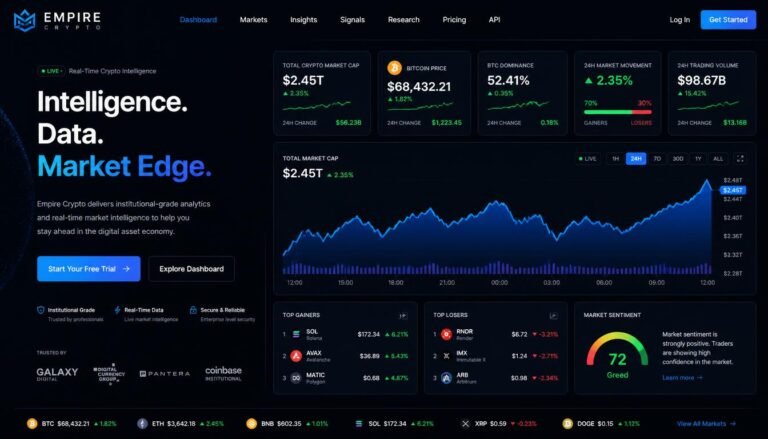
To build true competency in the Web3 space, you must develop a data-driven mindset. Relying on social media hype or speculative sentiment is no match for Crypto Data Online. Because public blockchains operate as globally distributed, transparent databases, they generate a continuous stream of public transactional records. Learning to interpret this raw bytecode shifts your perspective from speculative observation to objective, metric-backed analysis.

1. Structured Database Querying: Dune Analytics & Flipside Crypto
If you want to move beyond reading basic, static charts and learn how to extract specific insights from raw block structures, collaborative data platforms like Dune Analytics and Flipside Crypto are the gold standard.
These platforms ingest raw transaction bytecode directly from multiple blockchains, decode it, and organize it into clean, relational SQL databases.
+--------------------------+       +--------------------------+       +--------------------------+
|  Raw Blockchain Nodes    | ➔-─-➔ |  Crypto Data Online  | ➔-─-➔ |  Relational SQL Tables   |
| (Raw transaction byte)   |       | (Organized by contract)  |       | (erc20_ethereum.Transfer)|
+--------------------------+       +--------------------------+       +--------------------------+
                                                                                    │
                                                                                    ▼
                                                                      +--------------------------+
                                                                      | Custom User Crypto Data Online|
                                                                      |  (Charts, Trends, KPIs)  |
                                                                      +--------------------------+
Skills You Will Learn
- DuneSQL & Trino Syntax: You will learn to write structured data queries directly against live network logs.
- Event Log Filtering: You will learn how to target a project’s unique smart contract address and isolate events like
evt_Transferorevt_Swap.
Practical Learning Example
A student wanting to track how much USD Coin (USDC) is transferring across Ethereum in real time can write a fundamental SQL query into the Dune editor:
SQL
SELECT
    block_time,
    value / 1e6 AS usdc_amount,
    "from" AS sender,
    "to" AS receiver
FROM erc20_ethereum.evt_Transfer
WHERE contract_address = 0xa0b86991c6218b36c1d19d4a2e9eb0ce3606eb48
ORDER BY block_time DESC
LIMIT 50;
Learning Takeaway: Building or modifying these queries helps you visually track real active users, transaction metrics, and cohort retention loops without having to take a project’s marketing claims at face value.
2. Macro Network Fundamentals: Glassnode & CryptoQuant
When studying the macroeconomic health of large layer-1 proof-of-work or proof-of-stake systems (like Bitcoin and Ethereum), Glassnode and CryptoQuant serve as excellent training grounds. These platforms specialize in long-term supply dynamics, miner/validator behavior, and exchange capital flows.
Essential Learning Indicators
- Exchange Net Position Change: Tracks the net volume of an asset moving into or out of centralized exchanges. Learning to read this chart teaches you market psychology: large inflows of assets to an exchange generally point to increased selling pressure, while massive outflows to private wallets signify accumulation.
- Net Unrealized Profit/Loss (NUPL): Calculated as:$$\text{NUPL} = \frac{\text{Market Cap} – \text{Realized Cap}}{\text{Market Cap}}$$This quotient maps out the collective paper wealth of the network, showing you exactly when a network is entering phases of extreme market capitulation or overvalued euphoria.
- Realized Cap: Rather than using traditional market cap (current price multiplied by total supply), Realized Cap values each token based on the price it was last moved on-chain, offering a clearer picture of the actual capital invested in the ecosystem.
3. Protocol Financial Intelligence: Token Terminal
If you are an analyst approaching Web3 from a background in traditional finance, corporate accounting, or business operations, Token Terminal is an invaluable educational resource. It automatically cleans messy smart-contract transactional streams and standardizes them into traditional financial statements—such as income statements, balance sheets, and key financial ratios.
Critical Metrics to Master
- Total Fees vs. Protocol Revenue: Token Terminal teaches you to distinguish between total fees paid by end users and the portion of those fees retained by the protocol treasury or distributed to token stakers.
- Price-to-Fees (P/F) Ratio: The Web3 equivalent of a traditional P/E ratio, calculated by dividing the project’s fully diluted valuation by its annualized fees. Learning to analyze P/F ratios across competing applications (like comparing different decentralized exchanges) helps you find projects with strong, sustainable revenues relative to their market value. Crypto Data Online

4. Operational Wallet Identification: Arkham Intelligence & Nansen
Public blockchain ledgers are pseudonymous by default, identifying users as long, abstract hexadecimal strings (e.g., 0x71C...). To build forensic or behavioral tracking skills, tools like Crypto Data Online and Nansen apply human-readable labels to these addresses.
Technical Learning Tracks Crypto Data Online
- Entity Clustering: You can observe how advanced algorithmic tools cluster thousands of separate wallets together based on behavioral fingerprints and shared transaction inputs, revealing that they are controlled by a single entity (such as an investment fund or a crypto exchange).
- Smart Money Tracking: Nansen and Arkham flag addresses belonging to highly profitable traders or venture funds. Studying these “Smart Money” labels lets you track institutional capital deployment strategies as they happen on-chain.
5. Summary Platform Selection Matrix
To help you organize your daily learning routine, use this matrix to match specific data sites with your personal skill-building goals:
| Data Site | Focus Area | Core Technical Skill Built | Accessibility |
| Dune Analytics | Custom SQL Warehousing | Writing database queries, decoding smart contract logs. | Free / Community Tier |
| Token Terminal | Protocol Financials | Calculating Web3 valuation ratios (P/F, P/S), auditing protocol margins. | Freemium |
| Glassnode / CryptoQuant | Macro On-Chain Signals | Reading network liquidity flows, mining difficulty, and cost-basis layers. | Freemium |
| Arkham Intelligence | Wallet Attribution & Forensics | Tracking large whale portfolios, mapping out fund movements visually. | Free |
6. Your Daily Data Verification Routine Crypto Data Online
To practice your skills, use this multi-step framework to perform data-backed due diligence on an application or ecosystem. This routine mirrors the exact process used by institutional Web3 researchers to look past social media hype.
1.Assess Base Layer Infrastructure Uptime and Security:Platforms: Glassnode or CryptoQuant.
Look up the layer-1 network hosting your project. Examine its hash rate (PoW) or staking density ratio (PoS) to verify that the base layer infrastructure is secure and resilient against attacks.
2.Verify Genuine Economic Revenue Models:Platform: Token Terminal.
Search for the specific application protocol. Review its 30-day fee generation trend line and cross-reference it against its token incentives to ensure the platform isn’t over-emitting reward tokens to fake its user activity.
3.Audit Unique User Cohorts and Stickiness:Platform: Dune Analytics.
Locate a community-maintained dashboard tracking the project. Look for the ratio of Daily Active Users (DAU) to Weekly Active Users (WAU). Verify if the platform is retaining users organically or losing them over time.
4.Map Whale Concentration and Asset Distributions:Platform: Arkham Intelligence.
Open the asset’s balance profile. Audit the largest non-exchange holder portfolios. Ensure that a small group of private insider addresses doesn’t control the vast majority of the supply, minimizing centralization risk.
7. Crucial Security and Data Hygiene Practices Crypto Data Online
As you build your skills across these online applications and environments, your operational safety must remain your highest priority. Keep these foundational security principles in mind:
- Rely Strictly on Public Data Parameters: Valid data analytic sites, database query engines, and tracking dashboards operate entirely on public identifiers—such as wallet addresses, contract hashes, or transaction hashes. Never share or input your private keys or 12-word seed phrases into any web analytics application or learning site.
- Beware of Search Engine Domain Phishing: Scammers frequently buy sponsored ad links at the top of search engine results that mimic official analytics domains like Dune or Etherscan. Always manually check the URL extension, and bookmark your primary data platforms to avoid clicking on malicious sites.
- Verify Smart Contract Authenticity: Because public networks allow anyone to launch a token using an existing name (e.g., launching a fake token named “USDT”), always confirm the unique alphanumeric smart-contract hash using verified developer documentation or reputable aggregators like CoinGecko before running queries. Crypto Data Online
By shifting your educational routine away from speculative chatter and grounding it in verifiable public metrics, you will develop a deeply analytical approach to blockchain technology that is highly competitive in the modern digital economy.