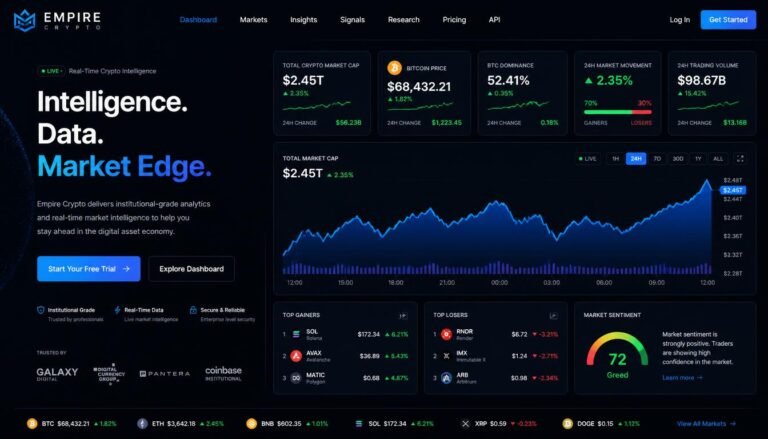
The digital asset ecosystem operates at a pace unmatched by traditional financial sectors. What was cutting-edge last year is often obsolete today, and navigating this landscape requires more than just standard textbook knowledge. It demands an agile approach to Crypto Data Online—utilizing data-driven, interactive, and structured online resources to transform complex technical data into actionable intelligence.
Whether you are a retail investor trying to decipher tokenomics, an analyst scraping raw transaction data from a distributed ledger, or a developer deploying smart contracts, the tools you use determine your success.

1. Structured Academic & Institutional Hubs
For individuals seeking an authoritative foundation without the noise of social media speculation, institutional platforms provide verified, peer-reviewed educational frameworks.
Global MOOCs & Dedicated University Programs
- University of Nicosia (UNIC) – Mastering Web3: UNIC hosts the world’s largest and longest-running Massive Open Online Course (MOOC) on digital currencies. Led by crypto pioneers and academic professors, this 12-week course breaks down everything from the UTXO model of Bitcoin to advanced smart contract logic on Ethereum, providing blockchain-verifiable certification.
- Coursera (Princeton, Michigan, Duke): Coursera hosts deeply analytical specializations. Princeton’s Bitcoin and Cryptocurrency Technologies remains a gold standard for understanding cryptographic hashing, signatures, and distributed consensus mechanisms. For those focusing on decentralized finance, Duke University’s DeFi: The Future of Finance breaks down automated market makers (AMMs), lending protocols, and systemic risks.
Exchange-Backed Knowledge Frameworks
- Binance Academy: This platform functions as a comprehensive digital textbook. It breaks down complex concepts like impermanent loss, zero-knowledge proofs, and account abstraction into bite-sized, non-technical explanations. It offers structured learning tracks with sequential difficulty levels.
- Coinbase Learn & BitDegree: These platforms gamify structural learning. They pair core theoretical concepts with visual assets, ensuring that historical context and practical onboarding tools are taught side-by-side.
2. On-Chain Analytics & Raw Data Platforms
True digital literacy in crypto requires looking beyond market price to study Crypto Data Online—the transparent, immutable records written directly to the blockchain ledger. Learning to interpret these platforms separates speculative guessers from data-literate analysts.
+-------------------------------------------------------------------------+
|                       THE INTERACTIVE DATA FUNNEL                       |
|                                                                         |
|  [Raw Ledgers]  -->   [Dune Analytics]   -->   [Glassnode / Nansen]     |
|  Unstructured         Custom SQL Queries        C-Suite Macro Indicators |
|  Blocks & Txns        Community Dashboards      Smart Money Portfolios  |
+-------------------------------------------------------------------------+
Community-Driven Analytics
- Dune Analytics: Dune is a revolutionary resource for smart learning because it turns raw blockchain data into readable SQL databases. Users do not just consume data; they can build, fork, and write custom queries to track decentralized exchange volume, protocol revenue, or NFT minting activity. Learning crypto on Dune teaches you how to audit a protocol’s health yourself.
- Flipside Crypto: Similar to Dune, Flipside provides structured datasets across dozens of chains, enabling learners to use SQL or programmatic tools to dissect transaction flows, protocol interactions, and user retention behaviors.
Proprietary Intelligence Engines
- Glassnode: The premier tool for Bitcoin and Ethereum macro analysis. Glassnode teaches users how to analyze supply dynamics through metrics like Realized Cap, Long-Term Holder Net Position Change, and Exchange Inflow/Outflow Volume. It trains learners to spot cyclical market shifts through data rather than sentiment.
- Nansen: Nansen specializes in wallet profiling. It labels millions of on-chain addresses, allowing students of the market to trace where “Smart Money” (venture funds, high-performing whales, and institutional entities) is allocating capital in real time.
3. Developer Bootcamps & Smart Contract Academies
For those pursuing a technical career path, learning is inherently project-based. The modern Web3 developer must understand execution environments, optimization frameworks, and defensive security.
Ecosystem Specialization Blueprint (2026)
| Ecosystem | Primary Languages | Core Developer Tooling | Primary Use Cases |
| Ethereum (EVM) & L2s | Solidity, Vyper | Foundry, Hardhat, Remix IDE | DeFi Protocols, DAOs, L2 Scaling Apps |
| Solana | Rust | Solana CLI, Anchor Framework | High-Frequency Trading, Web3 Gaming |
| Cosmos | Go, Rust | Cosmos SDK, CometBFT | Appchains, Interoperable Infrastructure |
Free Production-Grade Developer Frameworks
- Cyfrin Updraft: Led by industry-recognized engineers, Updraft offers hundreds of hours of 100% free, highly meticulous video and practical coursework. It guides users step-by-step from raw blockchain basics into complex Solidity 101, advanced Foundry testing frameworks, and specialized protocols like Curve Stableswap mechanics.
- Alchemy University: Created by one of the leading Web3 infrastructure providers, this interactive platform combines in-browser coding environments with video guides to teach JavaScript, Solidity, and advanced web3 patterns like Account Abstraction—enabling students to build full-stack decentralized applications (dApps) without complex local environment setups.
- Speedrun Ethereum: Built by the BuidlGuidl community, this resource gamifies learning by challenging developers to complete a sequence of live engineering quests—ranging from creating a simple staking contract to deploying a decentralized multi-signature wallet.
4. Market Aggregators & Cryptographic Reference Wikis
Before executing a trade or deploying code, users must consult neutral tracking platforms that act as the foundational dictionaries of the crypto economy.

Fundamental Aggregators
- CoinMarketCap & CoinGecko: These platforms offer far more than asset prices. They provide comprehensive metadata for every verified project, including verified smart contract addresses (to prevent phishing scams), historical circulating supply charts, token allocation breakdowns, and active exchange markets.
- DefiLlama: The absolute authority on decentralized finance tracking. DefiLlama tracks Total Value Locked (TVL), protocol yield percentages, token unlocks schedules, decentralized governance proposals, and venture capital inflows. It helps learners evaluate protocols based on real deposited capital rather than speculative trading volume.
Information Wikis and Research Nodes
- IQ.Wiki (Formerly Everipedia): Operating as the largest dedicated crypto encyclopedia on Earth, this decentralized resource features thousands of intensely cross-referenced pages explaining historical exploits, protocol histories, and biographies of key space contributors. Crypto Data Online
- Token Terminal: A platform that financializes crypto data. It treats protocols like traditional internet businesses, presenting metrics like price-to-earnings (P/E) ratios, daily active users, and token holder revenues to teach users how to perform fundamental financial analysis on decentralized code bases.
5. Security Protocols, Risk Mitigation, and Crypto Data Online
Smart digital learning is incomplete without mastering defensive security. Because blockchain transactions are immutable and irreversible, understanding operational security is an existential requirement.
Technical Axiom: The Self-Custody Framework
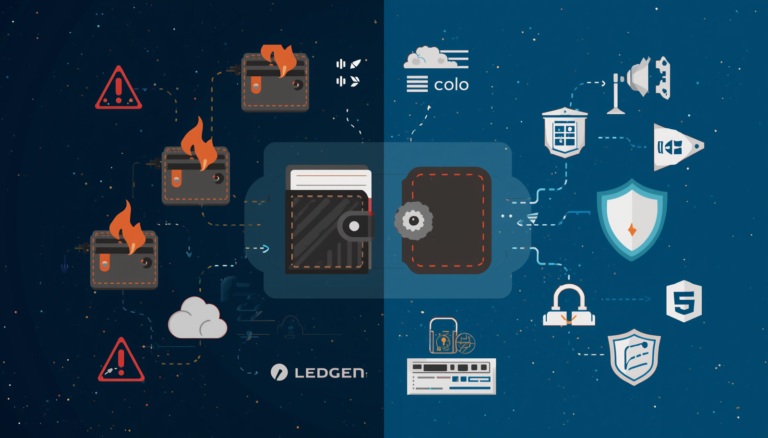
True ownership in the digital asset space relies on the separation of keys. Beginners must learn to transition away from centralized exchange counters to a dual-layer storage model:
- Hot/Software Wallets (e.g., MetaMask, Rabby, Phantom): Used exclusively for executing real-time dApp interactions, smart contract testing, and low-value transactions. Crypto Data Online
- Cold/Hardware Wallets (e.g., Ledger, Trezor): Kept completely isolated from persistent internet connections, holding the master cryptographic seed phrases securely offline for long-term storage assets.
Security Defenses & On-Chain Auditing Tools
- Smart Contract Hacking (JohnnyTime): A premium security resource that trains developers and analysts to think like malicious actors. Through interactive puzzle labs, users learn how protocols are drained via reentrancy bugs, oracle manipulation attacks, and flash loan economic exploits.
- Phishing & Revocation Learning Assets: Resources provided by security tools like Revoke.cash teach users how to monitor and systematically revoke active token allowances given to smart contracts, ensuring compromised or outdated protocols cannot continuously drain linked self-custody accounts.
Summary Action Plan for Smart Digital Learners
To avoid information overload, segment your Crypto Data Online journey into a clear, iterative process based on your ultimate goals:
+------------------------------------------------------------------------+
| 1. THE FOUNDATION                                                      |
|    - Master the basics with UNIC's free MOOC or Princeton's Coursera.  |
|    - Understand cryptographic key management and wallet security.     |
+------------------------------------------------------------------------+
                                   |
                                   v
+------------------------------------------------------------------------+
| 2. PATHWAY SELECTION                                                   |
|    [Analytical Track]                   [Technical Track]              |
|    - Master Glassnode macro charts.      - Complete Solidity 101 on    |
|    - Build custom SQL queries on Dune.     Cyfrin Updraft.             |
|    - Analyze protocol TVL on DefiLlama.  - Fork codebases via Foundry. |
+------------------------------------------------------------------------+
                                   |
                                   v
+------------------------------------------------------------------------+
| 3. VALIDATION                                                          |
|    - Build a verifiable github portfolio or write custom data reports. |
+------------------------------------------------------------------------+
By leveraging these structured frameworks rather than relying on unverified social feeds, you turn volatile market noise into a structured, highly valuable digital skillset.