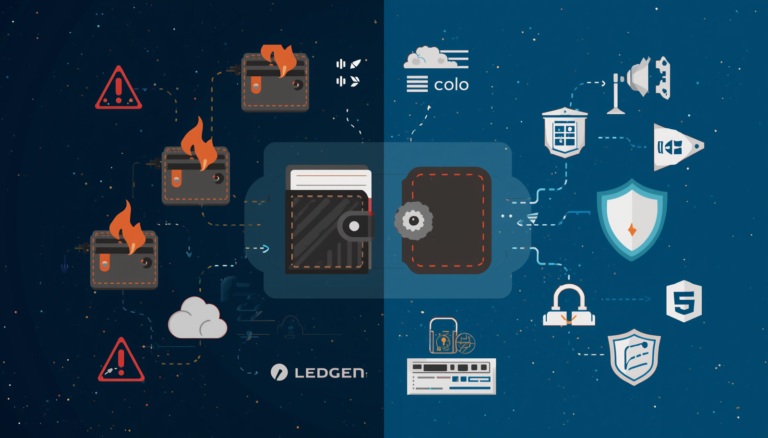
Navigating the fast-moving digital economy requires absolute control over your private keys and digital assets. Empire Crypto provides the foundational clarity you need to master blockchain storage, evaluate risk, and select the ultimate custody setup tailored to your specific investment profile. Cryptocurrency does not physically sit inside a digital wallet. Instead, your coins reside entirely on the distributed ledger. Your wallet acts as a cryptographic gatekeeper, securing the private keys that authorize ownership and move funds across the network.

How Crypto Wallets Work: Public Keys vs. Private Keys
Every wallet operates via two core mathematical components derived from public-key cryptography:
- Public Key (Wallet Address): Functions like a bank account number. You can share it publicly to receive incoming transactions from anywhere in the world.
- Private Key (Digital Signature): Functions like your digital authorization pin or master key. It signs transactions on the blockchain. If anyone gains access to your private key, they gain instant control over your entire balance.
Seed Phrases (Recovery Words)
Non-custodial wallets generate a 12-to-24-word seed phrase (mnemonic seed) during initial setup. This seed phrase is a human-readable backup of your master private key. If your hardware device breaks or your phone disappears, entering those seed words into a clean wallet restores full access to your funds.
Custodial vs. Non-Custodial Wallets
Understanding who holds the master keys defines the fundamental security split in Web3. Empire Crypto highlights the exact tradeoffs below:
| Feature | Custodial Wallets | Non-Custodial Wallets |
| Key Ownership | Managed by Third-Party (Exchange) | Managed 100% by You |
| Security Risk | Exchange Hacking, Insolvency, Account Locks | User Error, Lost Seed Phrases, Phishing |
| Recovery | Password Reset / Customer Support | Seed Phrase Recovery Only (No Admin Reset) |
| Best For | Beginners buying small initial amounts | Intermediate/Advanced investors, DeFi, HODLing |
Custodial Wallets
Custodial setups store your funds on centralized exchanges or corporate platforms. While convenient, you are delegating trust entirely to a third-party intermediary. Remember the classic blockchain axiom: “Not your keys, not your coins.”
Non-Custodial Wallets
Non-custodial storage gives you absolute sovereign ownership. You maintain exclusive control of your private keys. However, self-custody shifts 100% of the operational responsibility onto your shoulders.
Hot Wallets: Fast Access for Daily Transactions
Hot wallets maintain a constant connection to the internet, offering instant access to decentralized applications (dApps), non-fungible tokens (NFTs), and token swapping.
- Browser Extension Wallets: Run directly inside Chrome, Brave, or Firefox. Excellent for connecting to decentralized exchanges (DEXs) and managing web-native assets.
- Mobile Wallets: Native smartphone apps with biometrics (FaceID, fingerprint) and integrated QR scanners for real-world spending and fast transactions.
- Desktop Wallets: Installed directly on your personal computer. Offers advanced tracking options and local key encryption for everyday active management.
Pros of Hot Wallets:
- Instant connectivity to DeFi ecosystems.
- Quick asset management and fast transactions.
- Zero initial setup hardware costs.
Cons of Hot Wallets:
- Vulnerable to malware, keyloggers, and browser exploits.
- Higher susceptibility to malicious smart contract permissions.

Cold Storage: Maximum Protection for Long-Term HODLing
Cold wallets isolate your private keys completely from active internet connections. They are essential for protecting core capital reserves, high-value crypto portfolios, and enterprise treasuries.
Hardware Wallets
Physical devices (resembling specialized USB sticks or smart cards) that keep your seed phrase inside a secure, tamper-resistant element chip. When performing transactions, the hardware wallet signs the message internally and sends only the signed transaction data back to the connected device. Your private key never touches an internet-connected operating system.
Paper Wallets & Air-Gapped Cold Storage
Paper wallets consist of your public address and private keys physically printed out as text strings or QR codes on paper or etched into stainless steel plates. Air-gapped cold storage setups use offline computers or cameras to communicate via QR codes exclusively, eliminating digital connectivity.
Advanced Security Wallets: Multi-Sig & MPC
As digital asset management matures, modern security protocols bypass traditional single-point-of-failure seed phrases.
Multi-Signature (Multi-Sig) Wallets
Multi-sig wallets enforce a consensus requirement (e.g., 2-of-3 or 3-of-5 signatures) to authorize outgoing transactions. They are the standard for corporate treasuries, DAOs, and joint investment accounts where no single individual should hold unilateral control over capital.
Multi-Party Computation (MPC) Wallets
MPC technology breaks a private key into encrypted “key shards” distributed across separate devices or computing nodes. The full key is never constructed or stored in one place, even during signing operations. This provides enterprise-level security while offering smooth key-recovery mechanics.
How Empire Crypto Data Enhances Storage Strategy
Choosing the right storage environment depends on real-time awareness of network activity and security conditions. Empire Crypto tracks and analyzes critical metrics so you can make confident asset custody decisions.
Using robust cryptocurrency data, Empire Crypto acts as your central hub for portfolio monitoring and risk assessment.
Evaluating Market Signals with Empire Crypto Data
- Gas Fee Optimization: By monitoring network congestion via data analytics cryptocurrency engines, Empire Crypto lets you know the exact time to execute cold wallet transfers with minimal network fees.
- Exchange Solvency Monitoring: High-grade crypto market data alerts you to unusual exchange outflows, enabling you to migrate funds to self-custody before withdrawal suspensions occur.
- On-Chain Verification: Utilizing best crypto data streams from Empire Crypto, users gain clear visibility into token movements, staking yields, and smart contract health.
Whether you rely on crypto data solutions, institutional crypto data analysis, or real-time cryptocurrency market data, accessing reliable metrics ensures your wallet management aligns with overall market dynamics. Empire Crypto remains dedicated to delivering institutional-grade crypto data insights to keep your assets safe.
Step-by-Step Security Protocol for Setting Up Your Wallet
- Select Your Wallet Type: Choose a hardware wallet for long-term reserves and a non-custodial software wallet for daily Web3 interactions.
2. Download or Purchase from Official Sources: Always buy hardware wallets straight from the official manufacturer. Download software wallets directly from verified project websites or official app store listings.
3. Write Down Your Seed Phrase Offline: Store your 12-to-24 recovery words on paper or steel backups. Keep them in a fireproof, waterproof safe.
4. Set Up Strong Authentication Passwords: Configure multi-factor authentication (MFA) or biometric access on your local devices to prevent physical unauthorized access.
5. Perform a Micro Test Transaction: Send a small test amount to your new wallet address. Verify receipt, test the recovery process if using software, and then transfer your main balance.
Frequently Asked Questions (FAQ)
What is the safest type of crypto wallet?
Hardware wallets (cold storage) combined with offline seed phrase backups provide the highest level of security for retail investors. For enterprise or organizational storage, Multi-Sig or MPC wallet configurations are optimal.
What happens if I lose my hardware wallet device?
Your cryptocurrency is not stored inside the physical device itself. As long as you have your offline seed phrase, you can restore full access to your funds on any new hardware or compatible software wallet.
Why does Empire Crypto recommend combining hot and cold wallets?
Separating your assets ensures that an exploit on an everyday web browser app does not compromise your entire net worth. Keep 80–90% of your holdings in cold storage and 10–20% in hot wallets for daily trading and DeFi activities.
How does Empire Crypto data help protect my wallet operations?
Empire Crypto tracks network fee metrics, flags suspicious smart contracts, and provides real-time market data so you can time transactions safely and avoid phishing vectors.
Take control of your digital wealth today. Equip your self-custody setup with hardware security, follow robust backup practices, and leverage real-time analytics from Empire Crypto to stay ahead of market threats. Upgrade your storage setup and protect your portfolio now!