The Supreme Leadership of Iran has a central role in the country’s political system. Therefore, understanding its position is essential for anyone who wants to understand Iranian foreign policy, national security, nuclear policy, relations with Israel, ties with the United States, and the wider Middle East.
For readers following Iran News, statements from Iran’s highest leadership can be especially important because the Supreme Leader has broad authority over defense, national security, and major strategic decisions. However, Iran’s political system is not controlled by one person alone. The president, parliament, judiciary, Islamic Revolutionary Guard Corps, religious institutions, and other state bodies also influence national policy.
The Role of Supreme Leadership in Iran
The Constitutional Position
Iran’s political system was created after the 1979 Islamic Revolution.
The constitution established a system that combines elected institutions with religious authority.
Citizens vote for the president and parliament. However, the Supreme Leader has major authority over national defense, the armed forces, and broad strategic policy.
Therefore, the Supreme Leader’s position carries particular weight during international crises.
Authority Over the Armed Forces
The Supreme Leader is commander in chief of Iran’s armed forces.
This includes the regular military and the Islamic Revolutionary Guard Corps.
Therefore, major military strategy is closely connected to the Supreme Leadership.
During periods of tension with Israel or the United States, this authority becomes especially important.
Relationship With the President
The president manages much of the executive government.
The president can influence diplomacy, economic policy, and domestic administration.
However, presidential power has limits.
On major security questions, the Supreme Leader and other powerful institutions remain important.
Consequently, a change in president does not necessarily mean a complete change in Iran’s strategic foreign policy.
Main Supreme Leadership Principles
National Independence
One of the strongest themes in Iranian leadership is independence.
Iranian leaders frequently describe foreign interference as a threat to national sovereignty.
This view is connected to Iran’s historical experience with foreign powers.
Before the 1979 revolution, Iran had close relationships with Western powers.
After the revolution, the new government rejected much of that relationship.
Therefore, independence became a central part of the Islamic Republic’s identity.
Resistance to Foreign Pressure
Iran’s leadership has also emphasized resistance.
This means refusing to change important policies simply because another country demands it.
The United States has used sanctions and diplomatic pressure to influence Tehran.
Iranian leaders have often argued that accepting such pressure would weaken national sovereignty.
Therefore, resistance is both a political message and a security strategy.
Protection of the Islamic Republic
The Supreme Leadership also places strong importance on protecting the Islamic Republic itself.
From this viewpoint, threats can be military, political, economic, cultural, or informational.
Consequently, Iranian security policy often looks beyond conventional warfare.
Cyber operations, sanctions, media campaigns, political movements, and foreign alliances can all be viewed as parts of national security.
Relations With the United States
Deep Mistrust
Relations between Iran and the United States have remained hostile since the 1979 revolution.
The US embassy hostage crisis created deep mistrust.
Later, disagreements over Iran’s nuclear program increased tensions.
American sanctions added another major source of conflict.
Therefore, Iranian leadership often treats American policy with considerable suspicion.
Opposition to US Dominance
Iranian leaders frequently criticize what they describe as American dominance in international affairs.
They argue that Washington should not determine the political future of other countries.
This position is connected to Iran’s broader emphasis on independence.
Military Pressure
Iran’s leadership has also warned against military threats.
The country’s missile and drone programs are partly designed to create deterrence.
The logic is straightforward.
If an enemy believes an attack would produce a serious response, that enemy may hesitate.
Therefore, military capability is closely connected to Iran’s political strategy.
Relations With Israel
Opposition to Israeli Policies
Iranian leadership has long opposed the Israeli government and its policies toward Palestinians.
Support for the Palestinian cause has become a major part of the Islamic Republic’s foreign policy.
Iranian leaders frequently describe Israel as a major regional threat.
The Israel-Iran Rivalry
The rivalry includes several areas.
These include nuclear policy.
They include missile development.
They include intelligence operations.
They include cyber activity.
They include regional armed groups.
They also include direct military attacks.
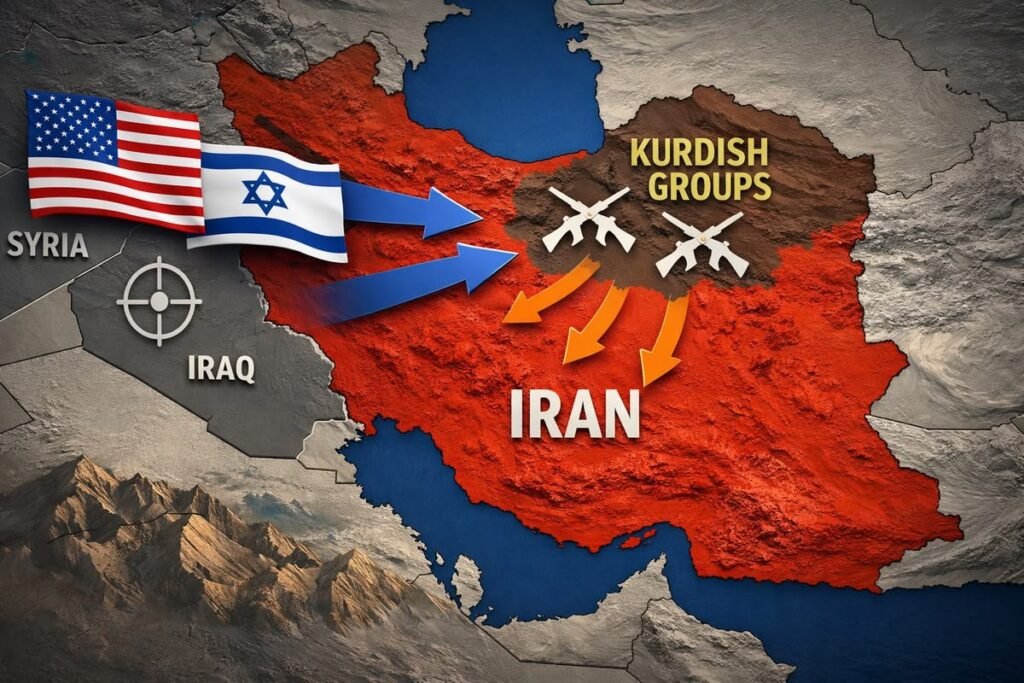
The conflict became more direct during 2024.
Iran launched major attacks against Israel in April and October.
Israel also carried out attacks against Iranian targets.
The June 2025 war then created another major escalation.
Why Israel Is Central to Iranian Security Policy
Iran views Israel as closely connected to American regional power.
Israel, meanwhile, views Iran’s nuclear and military programs as major threats.
Therefore, each country’s security strategy is influenced by the other.
This creates a difficult cycle.
Iran develops deterrence.
Israel seeks to reduce that capability.
Iran responds to Israeli action.
Israel then prepares for further Iranian threats.
Breaking this cycle is one of the region’s greatest diplomatic challenges.
Supreme Leadership and the Nuclear Program
Peaceful Nuclear Claims
Iran’s leadership has repeatedly stated that the country’s nuclear program is intended for peaceful purposes.
Iran argues that it has the right to use nuclear technology for energy, medicine, research, and other civilian needs.
International Concerns
However, Iran’s uranium enrichment activities have caused concern.
The main issue is not simply whether Iran has nuclear technology.
Many countries possess peaceful nuclear technology.
The concern is whether Iran could develop the ability to produce nuclear weapons.
Iran rejects the claim that it seeks such weapons.
The Religious Argument
Iranian leaders have also used religious arguments against nuclear weapons.
A frequently cited position is that weapons of mass destruction are inconsistent with Islamic principles.
However, outside observers continue to focus on Iran’s technical capabilities and international verification.
Therefore, both religious statements and practical evidence matter when assessing the nuclear question.
The 2015 Nuclear Agreement
The 2015 nuclear agreement created limits on Iran’s nuclear activities.
It also established international monitoring.
In return, Iran received sanctions relief.
However, the United States withdrew from the agreement in 2018.
Iran later reduced compliance with several restrictions.
This created another major crisis.
Why the Nuclear Issue Remains Important
The nuclear dispute connects foreign policy, security, economics, and diplomacy.
Israel wants to prevent Iran from obtaining a nuclear weapon.
The United States also opposes Iranian nuclear weapons capability.
Iran wants sanctions removed while protecting its nuclear rights.
Therefore, negotiations require difficult compromises.
Military Deterrence
Missiles
Iran has developed a large missile force.
Ballistic missiles are especially important.
They allow Iran to threaten distant targets without needing an air force equal to its strongest rivals.
Therefore, missiles form a major part of Iranian deterrence.
Drones
Iran has also invested heavily in drones.
These systems can provide surveillance and attack capabilities.
They can also be cheaper to produce than traditional military aircraft.
Consequently, drones have become an important element of Iran’s military strategy.
Air Defense
Iran has invested in air defense systems as well.
The goal is to make Iranian territory harder to attack.
Therefore, Iranian military planning involves both offensive deterrence and defensive protection.
The Revolutionary Guard
The Islamic Revolutionary Guard Corps has an important position within Iran’s security system.
It plays major roles in missile development, military planning, and regional operations.
The IRGC also has economic and political influence.
Therefore, understanding the Supreme Leadership’s security stance requires understanding the IRGC as well.
Regional Partnerships
Hezbollah
Hezbollah is one of Iran’s most important regional partners.
The group has political and military influence in Lebanon.
It has also fought Israel.
Therefore, Hezbollah remains closely connected to Iran’s regional security strategy.
Iraq
Iran has deep political, religious, cultural, and economic relationships with Iraq.
Several Iraqi armed groups have also developed close ties with Tehran.
However, Iraq maintains relations with the United States as well.
Therefore, Baghdad often tries to avoid becoming a battlefield between larger powers.
Yemen
Iran has supported the Houthi movement in Yemen.
The Houthis have missile and drone capabilities.
They have also attacked shipping in the Red Sea.
Therefore, Yemen has become part of the wider regional security picture.
Syria
Iran played a major role in supporting the Assad government during Syria’s civil war.
The fall of Assad’s government in December 2024 changed Iran’s regional position.
Consequently, Tehran’s strategy in Syria has had to adapt to a new political environment.
Support for Palestine
A Central Foreign Policy Theme
Support for Palestine has been a major part of Iran’s foreign policy since the revolution.
Iran has supported Palestinian political and armed groups.
It also strongly criticizes Israeli military operations and policies.
Therefore, the Palestinian issue is closely connected to Iranian regional messaging.
Gaza and Regional Politics
The Gaza conflict has increased political pressure across the Middle East.
It has also affected relations between Iran, Israel, the United States, and Arab governments.
Consequently, events in Gaza can influence Iran’s wider foreign policy.
Humanitarian Concerns
An Islamic perspective places strong importance on civilian protection.
Therefore, discussions about Palestine should not focus only on military strategy.
Civilian deaths, displacement, hunger, medical access, and destruction of homes are also important.
Iran News: Islamic Principles and Supreme Leadership
Justice
Justice is a major principle in Islam.
The Quran commands believers to stand firmly for justice.
Therefore, political loyalty should not replace moral judgment.
A person can support a country while still criticizing unjust actions by its government.
Protection of Life
Islam strongly values human life.
Consequently, civilian casualties should never be treated as unimportant.
This principle applies to all populations.
Iranian civilians, Palestinian civilians, Israeli civilians, Lebanese civilians, and others deserve protection.
Verification of Reports
The Quran also teaches believers to verify reports before acting on them.
This principle is especially important today.
During war, false videos and misleading claims can spread within minutes.
Therefore, readers should check sources before sharing dramatic reports.
Avoiding Excess
Islamic teachings also warn against injustice and excess.
Therefore, political discussion should avoid hatred toward entire populations.
Governments and ordinary citizens are not the same.
Conclusion
For readers following Iran News, this is particularly important because major questions about nuclear policy, military deterrence, relations with Israel, relations with the United States, and regional alliances are connected to the country’s highest security institutions.
Whether that influence produces further confrontation or greater diplomacy will depend on the choices made in Tehran and by its rivals.
For now, understanding the principles behind Iranian leadership remains one of the clearest ways to understand the country’s position in the wider Middle East.