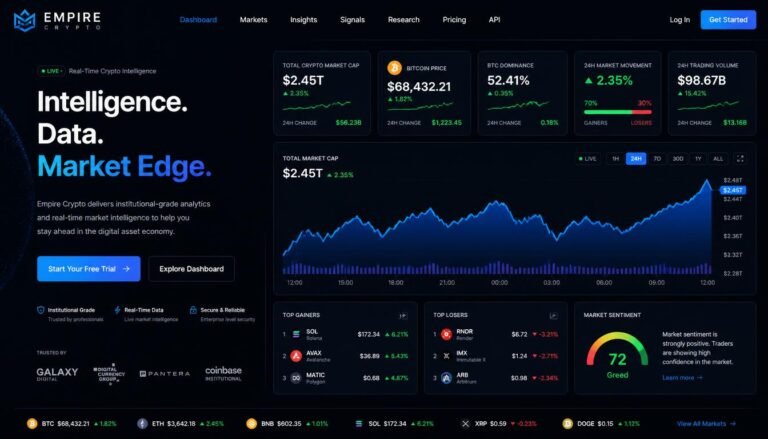
The digital asset landscape has evolved far beyond basic price charts. Building digital skills today requires learning to read, query, and interpret the massive volume of public blockchain data generated every single second.
Whether you want to build custom data pipelines, master specialized crypto analytics tools, or transition your career toward Web3 engineering, having a curated roadmap of Crypto Data Online is essential. This comprehensive guide covers the platforms, structured frameworks, and data strategies you need to sharpen your digital skill set.
1. Structuring the Crypto Data Skill Tree
Before jumping into specific platforms, it helps to break down the technical layers of the blockchain ecosystem. Crypto data is fundamentally structured differently than traditional financial data, and your learning path should reflect that.
                  ┌───────────────────────┐
                  │ WEB3 DATA SKILL TREE  │
                  └───────────┬───────────┘
         ┌────────────────────┼────────────────────┐
         ▼                    ▼                    ▼
┌─────────────────┐  ┌─────────────────┐  ┌─────────────────┐
│ Layer 1: Access │  │ Layer 2: Query  │  │ Layer 3: Build  │
├─────────────────┤  ├─────────────────┤  ├─────────────────┤
│ • Basic Metrics │  │ • Custom SQL    │  │ • API Enriched  │
│ • Aggregators   │  │ • Data Modeling │  │ • Data Pipelines│
│ • Dashboards    │  │ • Abstraction   │  │ • Applications  │
└─────────────────┘  └─────────────────┘  └─────────────────┘
- Layer 1: Semantic Consumption (No-Code Analytics): Reading pre-built dashboards, understanding fundamental tokenomics, and tracing fund movements through blockchain explorers.
- Layer 2: Relational Querying (Low-Code/SQL): Accessing indexed, human-readable blockchain databases to write your own queries, aggregate protocol fees, and map smart contract events.
- Layer 3: Programmatic Pipelines (Code/APIs): Pulling live raw data using programming languages like Python, Rust, or JavaScript via Web3 APIs and feeding it into machine learning models or live applications.
2. Foundational Platforms for No-Code Analytics
If you are new to data tools, your first step is learning to navigate aggregators that organize chaotic block data into clean, actionable dashboards.
DeFiLlama: The Core Hub for Ecosystem Health
DeFiLlama tracks the entire decentralized finance ecosystem across hundreds of different blockchains without charging user fees.
- Skills to Learn: Master tracking Total Value Locked (TVL) ratios, liquid staking distributions, and protocol fee generation.
- Key Insight: Comparing a protocol’s fully diluted valuation (FDV) against its annualized revenue helps you identify whether a project is overhyped or genuinely productive.
Token Terminal: Institutional Financial Metrics
Token Terminal brings traditional financial metrics—like price-to-sales (P/S) and price-to-earnings (P/E) ratios—straight to crypto data.
- Skills to Learn: Look at developer activity trends by tracking daily active GitHub contributors alongside protocol financial health.
- Key Insight: This platform helps you bridge the gap between traditional corporate valuation and Web3 token design.
3. Mastering On-Chain Queries (Low-Code & SQL)
To transition from a data consumer to a data creator, you need to learn how to query the blockchain ledger directly. The infrastructure surrounding this has scaled massively, making it easier than ever to get started.
Dune Analytics & Dune Docs
Dune handles the heavy lifting of parsing raw, cryptographic blockchain bytecode into accessible SQL tables. It is an invaluable training ground for modern Web3 data analysts.
- Dune AI & Modern Engines: Dune features an AI natural language interface that converts plain English prompts into SQL code, lowering the barrier for beginners while maintaining standard access via its high-performance engine for cross-chain queries.
- Core Concepts: Dune translates complex blockchain activities into human-readable tables (such as
ethereum.transactionsorerc20_ethereum.evt_Transfer). - Skill Development: You can practice writing SQL queries using specialized tools like Dune’s dbt (data build tool) Connector. This allows you to construct modular, production-grade data pipelines directly inside a crypto data warehouse.
- Learning Focus: Focus on tracking modern, high-value metrics like stablecoin velocity (calculating the ratio of total transfer volume to market cap) or monitoring real-world asset (RWA) tokenization pools across various issuers.
Footprint Analytics
Similar to Dune, Footprint provides both a SQL interface and a drag-and-drop builder designed for cross-chain analysis, with a particular focus on GameFi, NFT, and layer-2 scaling metrics.
4. Advanced Programmatic Engineering (APIs & Python)
For developers and advanced analysts, static dashboards aren’t always enough. Building your own data tools requires pulling live ledger states directly via high-performance APIs.
┌────────────────────────────────────────────────────────┐
│               PROGRAMMATIC PIPELINE FLOW               │
└───────────────────────────┬────────────────────────────┘
                            │
        ┌───────────────────┴───────────────────┐
        ▼                                       ▼
┌────────────────┐                     ┌────────────────┐
│ Alchemy /      │                     │ Coin Metrics / │
│ QuickNode      │                     │ Glassnode      │
├────────────────┤                     ├────────────────┤
│ Raw JSON-RPC   │                     │ Curated Macro  │
│ Node Requests  │                     │ On-Chain Data  │
└───────┬────────┘                     └───────┬────────┘
        │                                      │
        └───────────────────┬───────────────────┘
                            ▼
               ┌─────────────────────────┐
               │ Python Environment      │
               ├─────────────────────────┤
               │ • Pandas (Structuring)  │
               │ • NumPy (Calculations)  │
               │ • Jupyter Notebooks     │
               └─────────────────────────┘
Infrastructure Providers: Alchemy & QuickNode
These developer platforms give you instant access to remote blockchain nodes through standard APIs. Instead of running an expensive node on your own hardware, you can request block states programmatically using standard JSON-RPC methods.
Specialized Analytical Engines: Glassnode & Coin Metrics
If your goal is Crypto Data Online macroeconomic analysis, these platforms offer clean, institutional-grade APIs. They provide pre-calculated, deep-network metrics like Bitcoin realized cap, holder distribution waves, and miner hash-rate trends.
The Developer’s Toolkit
To make the most of these resources, you’ll want to build a comfortable working knowledge of a few industry-standard tools:
- Python (Pandas & NumPy): Essential libraries for handling, cleaning, and sorting massive datasets without hitting performance bottlenecks.
- Jupyter Notebooks: An ideal interactive environment for writing code, testing logic steps, and generating charts side by side.
- Web3.py / Web3.js: Libraries that make it easy to interact with smart contracts, parse events, and decode raw transaction data.

5. Free Structured Courses & Academic Resources
If you learn best through structured paths, several top-tier academic institutions and platforms offer comprehensive, free educational tracks covering digital assets and distributed systems.
| Provider | Course / Resource | Learning Focus |
| Princeton University (via Coursera) | Bitcoin and Cryptocurrency Technologies | Cryptographic protocols, mining mechanics, consensus foundations, and network security dynamics. |
| University at Buffalo (via Coursera) | Blockchain Specialization | Smart contract development foundations, decentralized app (dApp) design, and development testing. |
| UC Berkeley (via edX) | Blockchain Fundamentals | Crypto-economics, scaling solutions, and enterprise blockchain architectures. |
| freeCodeCamp | Data Analysis with Python | Comprehensive data manipulation using Pandas and NumPy, which translates perfectly to processing crypto API data. |
6. A Step-by-Step Practical Blueprint
Building technical digital skills is a hands-on process. Here is an actionable 4-week roadmap designed to take you from a curious beginner to a capable, data-focused analyst: Crypto Data Online
Week 1: Master the Dashboard Fundamentals
Start by spending 15 minutes a day on DeFiLlama and Token Terminal. Pick three separate ecosystems (for example, Ethereum, Solana, and Base) and contrast their metrics:
Data Exercise: Find the daily transaction fees generated by each network. Divide that total fee pool by the number of active wallets to calculate the average transaction cost per user. Document how these patterns shift during high-traffic windows.
Week 2: Write Your First SQL Queries
Set up a free account on Dune Analytics. Skip the pre-built layouts and head straight to the query editor.
- Look up a project you are interested in and write a query to pull its basic transaction logs.
- Practice filtering transactions by block numbers or look for addresses moving more than $100,000 worth of value. Crypto Data Online
- Use Dune’s documentation to learn how to join transaction tables with price tables, turning raw on-chain data into clear dollar valuations.
Week 3: Connect to a Live Node API
Sign up for a free developer tier on Alchemy or QuickNode and open a Jupyter Notebook.
- Write a simple Python script using
requestsor theweb3.pylibrary to query the latest block number. - Modify your script to pull the balance of a specific public smart contract.
- Practice converting raw data values (like converting standard Ethereum Wei integers back into readable decimal numbers) to get comfortable formatting blockchain data.
Week 4: Build and Share a Public Project
The best way to solidify your skills is to build in public. Take the data you collected in the previous weeks and turn it into something shareable: Crypto Data Online
- Design a public dashboard on Dune that tracks an interesting trend (like tracking daily transaction volume on an emerging layer-2 chain).
- Alternatively, publish a clean Jupyter Notebook on GitHub analyzing recent stablecoin supply shifts.
The Value of Data Sovereignty
Developing your digital skills using online crypto resources changes how you interact with the digital economy. It moves you past the noisy cycles of social media speculation and grounds your decisions in verifiable on-chain facts. As public networks grow more complex, the ability to independently pull, clean, and interpret ledger data will remain a highly valuable skill set across both Web3 engineering and modern digital finance.